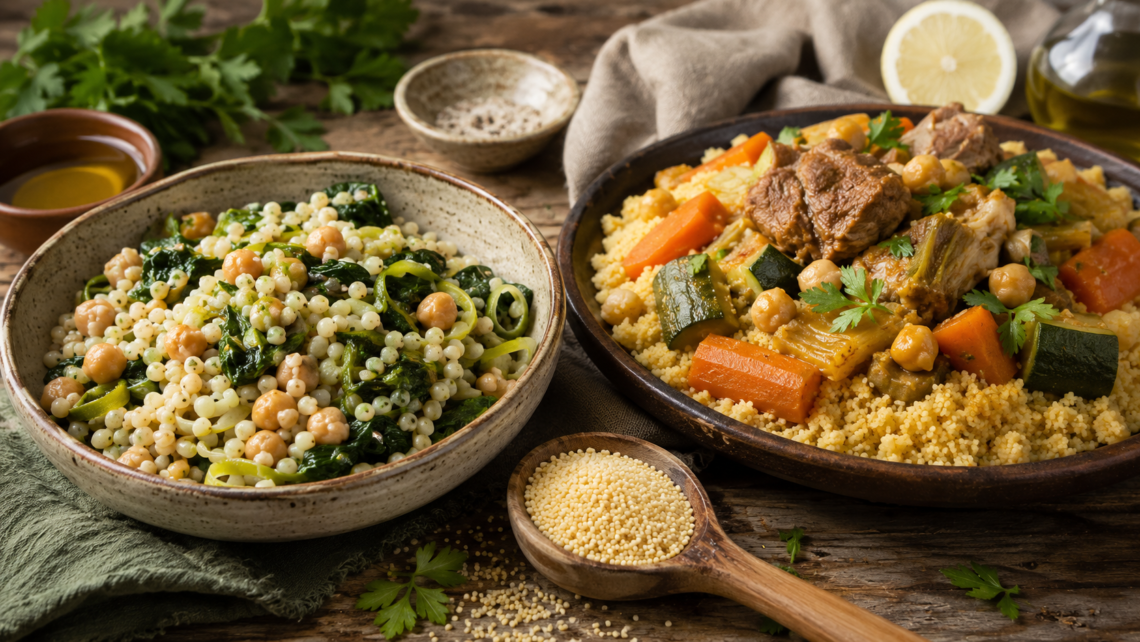
Kouskousi is a small but interesting food name that can mean slightly different things depending on where you hear it. In simple words, kouskousi usually refers to a tiny semolina-based food used in Mediterranean and North African cooking. It may describe the well-known North African couscous made from small rolled granules of durum wheat semolina, or it may refer to a small Greek pasta that looks similar to pastina, tiny beads, or small round pasta shapes.
The spelling can also change. Some people write it as kouskousi, while others use kouskous, couscous, or cous cous. These spellings are connected because they come from food traditions that share similar ingredients, shapes, and cooking styles. However, they are not always exactly the same food.
This is where many readers get confused. In North African cooking, couscous is usually a steamed semolina staple served with stew, vegetables, chickpeas, meat, or spices. In Greek cooking, kouskousi may refer to a tiny pasta used in soups, bean dishes, and rustic comfort meals. Greek food writer Diane Kochilas, for example, uses Greek kouskousi pasta in dishes with chickpeas, Swiss chard, lentils, and other home-style ingredients.
This article explains what kouskousi means, where it comes from, how it compares with couscous pasta, pearl couscous, quinoa, and instant couscous, and how you can use it in everyday cooking. By the end, you will understand why one small word can carry such a rich food story.
Quick Guide Table: Kouskousi At A Glance
| Topic | Quick Answer |
| What is kouskousi? | A tiny semolina-based food connected with Greek pasta and North African couscous. |
| Is kouskousi pasta? | Greek kouskousi is often a tiny pasta, while North African couscous is rolled semolina granules. |
| Is kouskousi gluten-free? | No, traditional kouskousi and couscous are usually made from wheat semolina, so they contain gluten. |
| Best uses | Soups, stews, skillet meals, couscous platters, vegetable bowls, and bean-based dishes. |
| Similar foods | Couscous, pearl couscous, pastina, orzo, acini di pepe, and quinoa as a gluten-free alternative. |
| Main nutrition point | Mostly carbohydrates, with some protein and small amounts of fiber depending on the type. |
What Is Kouskousi?
Kouskousi is best understood as a small semolina-based food that belongs to the wider family of tiny wheat products used around the Mediterranean and North Africa. In many cases, it is linked with couscous, which is made from durum wheat semolina. Semolina is the coarse flour made from durum wheat, the same hard wheat often used for pasta.
In North African cooking, couscous is not shaped like long noodles or shells. Instead, it looks like tiny grains. These small granules are usually steamed until they become light and fluffy. This makes couscous look a little like rice or a grain, even though it is made from wheat.
Greek kouskousi is slightly different. It is often treated more like a tiny pasta. It may be cooked in boiling water, broth, or directly inside soups and stews. Because of its small size, it cooks quickly and absorbs flavor well.
The term can confuse readers because different cultures use similar names for foods that are close in shape but different in method. One person may use kouskousi to mean tiny Greek pasta, while another may think of North African couscous. Both meanings are useful, but the exact meaning depends on the region, recipe, and product label.
Kouskousi Origin And Cultural Background
The story of kouskousi is connected to the wider history of semolina foods across the Mediterranean and North Africa. Wheat, especially durum wheat, has long been important in these regions. People used it to make bread, pasta, bulgur-like dishes, and small grain-shaped foods that could be cooked with soups or stews.
North African couscous is especially important in the Maghreb region, including Morocco, Algeria, Tunisia, and Mauritania. In 2020, UNESCO recognized the knowledge, know-how, and practices connected with the production and consumption of couscous as intangible cultural heritage linked to Algeria, Mauritania, Morocco, and Tunisia. This shows that couscous is not only a food but also a part of family life, hospitality, and shared tradition.
Greek kouskousi has a different place in food culture. It belongs more to the world of Greek home cooking, where small pasta shapes are often added to soups, legumes, and vegetable dishes. In many homes, tiny pasta is used because it is affordable, filling, and easy to combine with simple ingredients.
Regional names and spellings vary because food language travels. A dish may move from one country to another, change shape, and take on a local name. That is why kouskousi, kouskous, and couscous can feel connected while still pointing to different cooking traditions.
Greek Kouskousi As A Tiny Pasta
Greek kouskousi is usually described as a small, round pasta. It can remind readers of pastina, acini di pepe, or very small orzo-like pasta, though the exact shape may vary by producer. Its small size is one of its biggest strengths because it cooks quickly and blends smoothly into many simple dishes.
In Greek-style cooking, kouskousi works well in soups, skillet meals, and rustic recipes made with vegetables and legumes. It can be paired with chickpeas, lentils, leeks, greens, onions, herbs, olive oil, and broth. This makes it useful for everyday meals that feel warm, filling, and comforting.
One reason Greek kouskousi works so well in comfort food is its texture. It gives body to a dish without making it heavy. In a soup, it can make the broth feel richer. In a skillet meal, it can help bring vegetables and beans together into one complete dish.
It is also flexible. You can cook it plainly and add it to vegetables, or you can simmer it in a flavorful broth so it absorbs more taste. This is why Greek kouskousi can be used in both light meals and hearty family-style cooking.
North African Couscous And Traditional Kouskous
North African couscous is the version many people know around the world. It is made from small granules of rolled semolina and is often served as a base for rich stews. Traditional couscous is usually steamed, not boiled like pasta. This steaming process helps the granules become light, separate, and fluffy.
In many North African homes, couscous is cooked in a special pot often known as a couscoussier. The stew cooks in the lower part, while the couscous steams above it. This allows the couscous to absorb gentle aroma from the stew while staying soft and airy.
Traditional couscous is commonly served with vegetables such as carrots, zucchini, pumpkin, turnips, onions, or chickpeas. It may also be served with lamb, chicken, beef, fish, or only vegetables, depending on the region and family style. Spices can include cumin, coriander, cinnamon, saffron, turmeric, ginger, or chili, but the flavor changes from country to country.
Couscous is a staple because it is filling, versatile, and easy to share. It can be served at family meals, gatherings, and special occasions. For many people, couscous is not just a side dish. It is the center of the meal.
Kouskousi Vs Couscous Pasta
The difference between rolled couscous and pasta-style kouskousi is important. Traditional couscous is made by forming tiny granules from semolina. These granules are usually steamed. Greek kouskousi, on the other hand, is often treated like small pasta and may be boiled or simmered.
Texture is one major difference. North African couscous is usually light and fluffy when cooked correctly. Greek kouskousi pasta can be softer, rounder, and more pasta-like. It may feel more tender in soups and more filling in skillet meals.
The cooking method also changes the final dish. Couscous is often hydrated or steamed, especially when using traditional or instant forms. Kouskousi pasta is more likely to be cooked in water or broth until tender. If it is cooked too long, it can become soft or mushy, so timing matters.
Some people call couscous a pasta because it is made from wheat semolina rather than being a true grain like rice. Others treat it like a grain because of how it looks and how it is served. Both views are common, but for practical cooking, it is better to look at the exact product in your kitchen and follow the package instructions.
Pearl Couscous, Instant Couscous, And Kouskousi
Pearl couscous is another variety that can add to the confusion. It is larger than regular couscous and has a round, chewy texture. It is often called Israeli couscous in many grocery stores. Unlike fine Moroccan-style couscous, pearl couscous usually needs to be simmered like pasta until tender.
Instant couscous is different again. It is usually pre-steamed and dried, which means it cooks very quickly. Most instant couscous only needs hot water or broth, a short resting time, and gentle fluffing with a fork. This makes it popular for fast side dishes and meal prep.
Greek kouskousi sits closer to the tiny pasta side of this family. It is not exactly the same as instant couscous or pearl couscous, although all three can be made from wheat and used in similar Mediterranean-style meals.
Each type has its best use. Fine couscous is excellent under stews and saucy vegetables. Pearl couscous is good in salads, warm bowls, and side dishes where you want a chewy texture. Greek kouskousi works nicely in soups, beans, greens, and simple skillet meals.
Kouskousi Nutrition: What Readers Should Know
Kouskousi nutrition depends on the exact product, serving size, and recipe. Since most kouskousi and couscous products are made from wheat semolina, they are mainly a source of carbohydrates. They also provide some protein and small amounts of fiber, especially if you choose whole wheat versions.
Cooked couscous is usually low in fat by itself. According to nutrition references using USDA-style data, one cooked cup of couscous has about 176 calories, around 36 grams of carbohydrates, about 6 grams of protein, and very little fat. These numbers are useful as a general guide, but packaged products can vary.
The nutrition changes a lot depending on what you add. Kouskousi cooked with vegetables, chickpeas, lentils, or greens becomes more filling and may offer more fiber, vitamins, and minerals. Adding olive oil, butter, meat, cheese, or rich sauces increases calories and fat.
This is why kouskousi should be seen as a base, not the whole meal. It can be part of a balanced plate when paired with vegetables and protein. A simple bowl with kouskousi, chickpeas, sautéed greens, herbs, and olive oil can be more satisfying than plain kouskousi alone.
Kouskousi Calories And Serving Size
Kouskousi calories depend on whether you measure it dry or cooked. This is important because dry semolina products expand after cooking. A small dry amount can become a much larger cooked serving once it absorbs water or broth.
For regular cooked couscous, one cup is often listed around 176 calories, but the number rises quickly if you add oil, butter, meat, nuts, dried fruit, or creamy sauces. A plain serving and a rich restaurant-style serving can be very different.
A balanced serving size depends on the rest of the meal. If kouskousi is being served as a side dish, a smaller portion may be enough. If it is the main base of a meal, it should be paired with vegetables and a protein source such as beans, chickpeas, fish, chicken, eggs, or tofu.
For everyday meals, think of kouskousi as the carbohydrate part of the plate. Add vegetables for volume and nutrients, then add protein for fullness. This simple approach makes the meal more balanced without making food choices complicated.
Is Kouskousi Or Couscous Gluten-Free?
Wheat-based kouskousi and couscous are not gluten-free. This is one of the most important points for readers who have celiac disease, gluten sensitivity, or wheat allergy. Couscous is made from semolina, and semolina comes from durum wheat. Beyond Celiac clearly states that couscous is not gluten-free because it is made from durum wheat semolina.
The Celiac Disease Foundation also lists couscous among foods that contain gluten, along with many wheat-based pastas and noodles. So if someone searches “what is couscous gluten free,” the simple answer is no, regular couscous is not gluten-free.
There are gluten-free alternatives, but they are not the same as traditional kouskousi. Some brands make couscous-style products from corn, rice, chickpea flour, lentils, or other gluten-free ingredients. Quinoa, millet, rice, and gluten-free small pasta can also be used in similar meals.
People with celiac disease should always check the label carefully. It is not enough for a product to look like couscous. It must be clearly made without wheat, barley, rye, or cross-contaminated ingredients.
Kouskousi Vs Quinoa
Kouskousi and quinoa are often compared because both can be served in bowls, salads, and side dishes. However, they are very different foods. Kouskousi or couscous is usually wheat-based, while quinoa is a seed that is often cooked and eaten like a grain.
The biggest difference for many readers is gluten. Regular kouskousi and couscous contain gluten because they come from wheat. Quinoa is naturally gluten-free, although people with celiac disease should still choose products labeled gluten-free to avoid cross-contact during processing.
Nutrition is another difference. Couscous is a light, quick-cooking carbohydrate with some protein. Quinoa usually has more fiber and is known for containing all nine essential amino acids, which makes it a complete protein source. A dietitian-reviewed comparison notes that quinoa is gluten-free and higher in fiber, while couscous is a quick, low-fat carbohydrate option that can still fit into a balanced diet.
Flavor and texture also matter. Kouskousi and couscous are mild and absorb sauces well. Quinoa has a nuttier taste and a slightly firmer bite. If you want a soft base for stew, couscous may be better. If you need a gluten-free bowl with more fiber, quinoa may be the better choice.
Popular Kouskousi And Couscous Recipes
Kouskousi and couscous can be used in many simple recipes. Greek-style kouskousi soups are a good place to start. The tiny pasta can be simmered with lentils, onions, herbs, tomato, greens, or broth until the soup becomes warm and filling.
A skillet kouskousi meal is another easy option. Cook the kouskousi separately or in broth, then combine it with sautéed leeks, onions, garlic, Swiss chard, spinach, chickpeas, and olive oil. This type of dish feels rustic but still fresh and balanced.
Couscous with roasted vegetables is one of the easiest modern uses. Instant couscous can be prepared with hot broth and then mixed with roasted carrots, zucchini, peppers, onions, herbs, lemon juice, and olive oil. It works as a side dish or a light lunch.
North African-style couscous with stew is more traditional. The couscous is served as a fluffy base, and a spiced vegetable, lamb, chicken, or chickpea stew is spooned over the top. This style shows why couscous has remained such an important staple for generations.
For quick meals, instant couscous can be served with herbs, lemon, canned chickpeas, tuna, grilled vegetables, or leftover chicken. Kouskousi pasta can also be added to vegetable soups when you want more body and comfort.
Tips For Cooking Kouskousi The Right Way
The best way to cook kouskousi depends on which type you have. If it is Greek kouskousi pasta, cook it like small pasta and watch it closely. Because the pieces are tiny, they can turn soft quickly. Stir gently and taste near the end of cooking so you can stop before it becomes mushy.
If you are cooking instant couscous, do not boil it for a long time. Usually, hot water or broth is enough. Cover it, let it rest, and then fluff it with a fork. This helps keep the grains separate instead of sticky.
Broth is often better than plain water when you want more flavor. Vegetable broth, chicken broth, or the liquid from a stew can make kouskousi taste richer. For Greek-style dishes, olive oil, lemon, parsley, dill, mint, garlic, onions, and greens work well. For North African-style couscous, warm spices, chickpeas, root vegetables, raisins, or herbs can add depth.
Toasting is useful for pearl couscous or some pasta-style versions. A short toast in olive oil before adding liquid can give a nuttier flavor. For traditional couscous, steaming and fluffing are the key steps. For soups, add kouskousi near the end so it does not overcook.
Conclusion
Kouskousi is worth knowing because it connects several food traditions in one small ingredient. It may mean tiny Greek pasta used in soups and rustic meals, or it may be connected with North African couscous, the famous semolina staple served with stews, vegetables, chickpeas, meat, and spices.
The main thing to remember is that region matters. Greek kouskousi and North African couscous are related in name and ingredient, but they are not always used in the same way. One is often cooked like pasta, while the other is often steamed or quickly hydrated, depending on the type.
When choosing kouskousi for cooking, look at the package, size, and instructions. Use Greek kouskousi for soups, beans, greens, and skillet meals. Use fine couscous for fluffy side dishes and traditional stew platters. Use pearl couscous when you want a chewier texture, and choose quinoa or gluten-free couscous alternatives if you need to avoid gluten.
In everyday cooking, kouskousi can be simple, affordable, and comforting. With vegetables, herbs, beans, broth, olive oil, or a hearty stew, this tiny Mediterranean staple can become a warm and satisfying meal.
FAQ’s:
What Is Kouskousi Made Of?
Kouskousi is usually made from semolina, which comes from durum wheat. In Greek cooking, it may be a tiny pasta, while in North African cooking, it is linked to couscous granules.
Is Kouskousi The Same As Couscous?
Not always. Kouskousi can refer to Greek-style tiny pasta, while couscous usually means rolled semolina granules. The meaning depends on the region, recipe, and product label.
Is Kouskousi Gluten-Free?
No, traditional kouskousi is not gluten-free because it is commonly made from wheat semolina. People with celiac disease or gluten sensitivity should choose certified gluten-free alternatives.
How Do You Use Kouskousi In Cooking?
Kouskousi can be cooked in soups, simmered with broth, mixed with greens and beans, or served with vegetables and stews. It absorbs flavor well and works in comfort meals.
What Is The Difference Between Kouskousi And Quinoa?
Kouskousi is usually wheat-based and contains gluten, while quinoa is naturally gluten-free. Quinoa has more fiber and protein, but kouskousi has a softer, pasta-like texture.
Craving more knowledge? Head over to my website for new articles.
DisclaimerThis article is for general informational and educational purposes only. Food names, ingredients, and nutrition values may vary by brand, region, and recipe. Always check product labels, especially if you have gluten sensitivity, celiac disease, or food allergies.